
Irish Part J building regulations for stoves
Under Irish Building Regulations Technical Guidance Document J, every new or replacement stove requires an I.S. EN 50291-1 carbon monoxide alarm in the stove room, within 5 m of every bedroom door and along the flue path. Stoves over 5 kW need a permanent non-closeable external air vent (550 mm² per kW above 5 kW), and modern airtight homes (air permeability at or below 5 m³/h·m²) need dedicated external air even for 5 kW models.
The statutory rules governing permanent air supply, carbon monoxide alarms, hearth sizing and chimney outlet heights in Ireland.
Free, no obligation. One local installer prices it, not five.
- >5 kWpermanent external air vent trigger
- I.S. EN 50291-1mandatory Irish CO alarm standard
- 600 mmflue clearance above roof ridge
- 125 mmconstructional hearth thickness
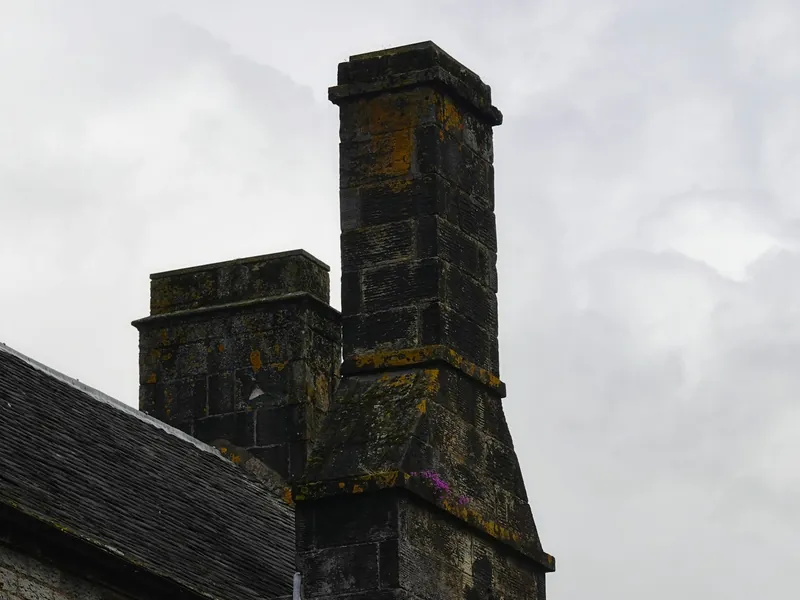
Permanent external air vents under TGD Part J
A solid-fuel stove draws air continuously from the room to sustain clean combustion and push exhaust safely up the stack. Starving a stove of fresh air reverses flue draw and pulls odourless carbon monoxide back into the living space.
Older pre-2008 home, stove up to 5 kW
- Irish Part J ventilation rule
- Normally exempt from extra dedicated room vent (natural air leakage suffices)
- Practical fitting method
- Still verify draw if windows/doors were upgraded and draught-proofed
Older pre-2008 home, stove over 5 kW
- Irish Part J ventilation rule
- Permanent non-closeable external vent sized at 550 mm² free area per kW above 5 kW
- Practical fitting method
- Core-drilled wall vent (€120 to €280) with anti-draught baffle
Modern airtight home (≤5 m³/h·m²)
- Irish Part J ventilation rule
- Dedicated external air required from 0 kW (2750 mm² for a 5 kW stove)
- Practical fitting method
- Direct external air intake kit (€160 to €360) sealed to stove base
Room with kitchen extractor fan
- Irish Part J ventilation rule
- Run a spillage test with fans on maximum; add direct air or extra vent if smoke pulls back
- Practical fitting method
- Direct room-sealed air supply stops extractor fans competing with the flue
Price my stove
Four quick taps show your Irish stove installation figure before we ask for a phone number. One installer rings you, not five.
A freestanding stove, with flexible chimney lining, supplied and fitted: €2,200 to €4,200, typical Irish fitted range.
How this stove figure is worked out
The range reflects typical Irish rates for that appliance type, flue route and scope. Room-heater figures cover an EcoDesign 2022 stove, register plate, vitreous connecting pipe, bird cowl, smoke test and I.S. EN 50291-1 CO alarm. Selecting chimney relining allows for an 8 m to 10 m 904L flexible stainless liner. Boiler stoves allow for open-vented copper primaries and a heat-leak radiator. Tall 3-storey roof scaffolding, core-drilling air vents and marble surrounds depend on the house and are confirmed during the chimney survey.
Mandatory carbon monoxide alarms and flue termination heights
- I.S. EN 50291-1 CO alarm in three zones. Under S.I. No. 133 of 2014, an audible certified CO alarm with end-of-life indicator must be fitted in the stove room, inside each bedroom or within 5 m of every bedroom door, and in any room the chimney flue passes through.
- 600 mm above the ridge. Where a chimney or twin-wall terminal exits within 600 mm horizontally of a pitched roof ridge, the outlet must extend at least 600 mm above the ridge line.
- 2300 mm horizontal clearance on slopes. Further down a pitched roof, the outlet must keep at least 2300 mm (2.3 m) horizontal clearance from the roof surface and clear opening Velux or dormer windows.
- 1000 mm above flat roofs. Flues exiting a flat-roof kitchen extension must rise at least 1000 mm above the flat roof deck and stay clear of adjacent higher gable walls.
- Never reduce flue diameter below the stove collar. Minimum domestic bore is 125 mm (5 inch) only where explicitly approved by the stove manual; 150 mm (6 inch) applies to most multifuel models.
Related stove & flue guides
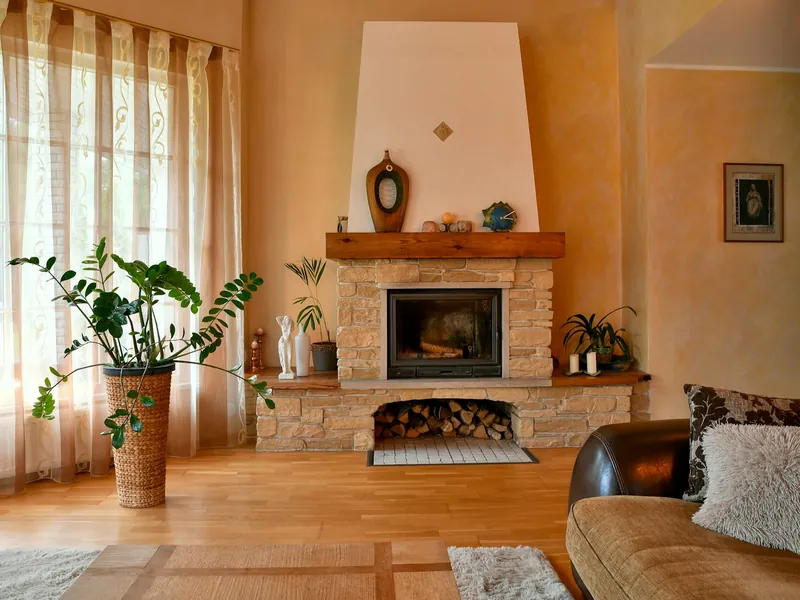 Hearths & clearances125 mm constructional vs 12 mm hearths, front aprons and timber mantel gaps.
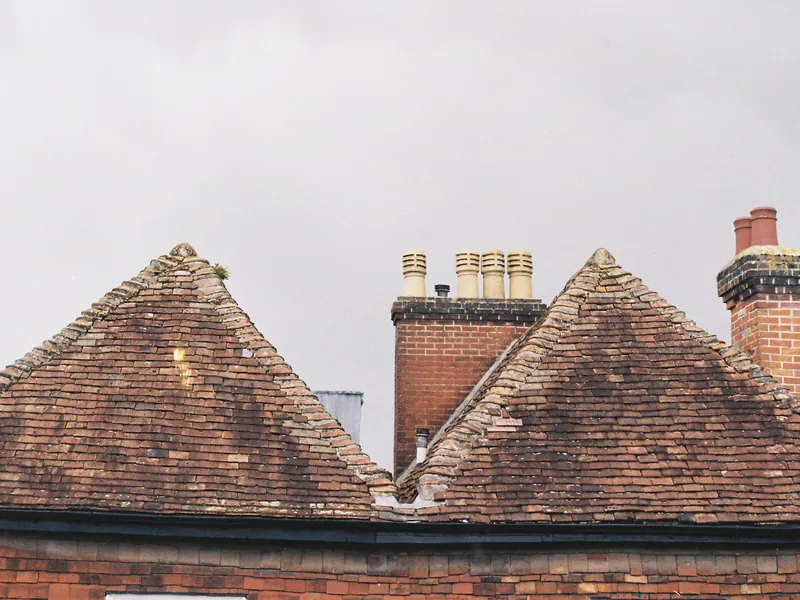 Chimney flue liners316L and 904L flexible stainless liners, vermiculite insulation and chimney cowls.
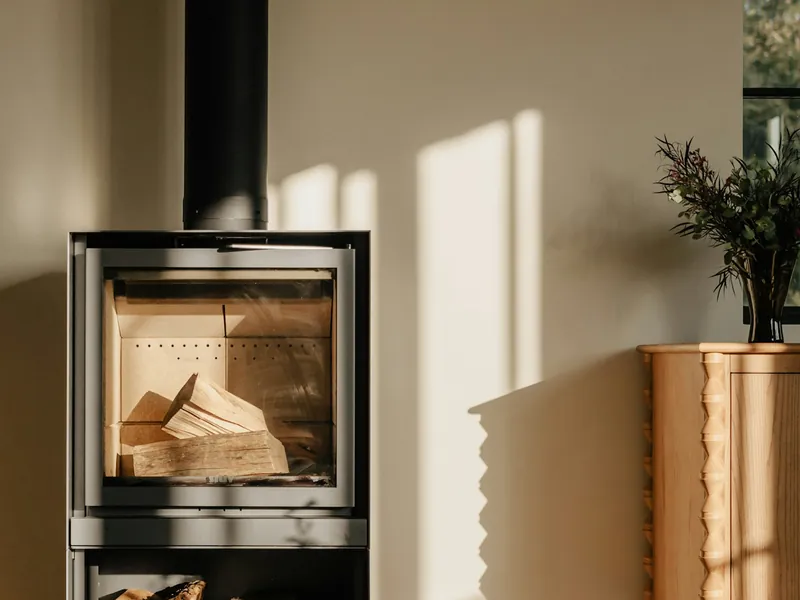 Twin-wall flue systemsInsulated stainless flue routes through gable walls or pitched roofs with no chimney.
 kW room sizing guideMatching output to room cubic volume (1 kW per 14 m³) so glass stays clean.
 EcoDesign & fuel rulesEcoDesign 2022 efficiency thresholds and Solid Fuel Regulations wood moisture caps.
 Stove installation costComplete Irish breakdown for room heaters, boiler stoves, liners and extras.
Stove fitting questions answered
Do I need an air vent in the wall for a 5 kW stove in Ireland?
In an older naturally ventilated house, a stove rated at or below 5 kW usually needs no extra wall vent. In a post-2008 airtight home or renovated house with triple glazing and mechanical extractors, Part J requires 2750 mm² of permanent air or a direct external air duct.
Can I fit a hit-and-miss closable vent for a stove?
No. Part J prohibits closable grilles on combustion air vents; the grille must remain permanently open with anti-draught baffles rather than sliding shutters.
Where should the carbon monoxide alarm be mounted in the stove room?
Mount it 1 m to 3 m horizontally from the stove, either on the ceiling at least 300 mm from any wall, or high on a wall above window/door heads and at least 150 mm below the ceiling.
Do I need a commissioning notice after stove fitting?
Ask your installer for a written handover sheet recording flue liner grade, smoke test result, hearth dimensions, air vent free area and CO alarm placement.
Every stove installation page and Part J guide
Stoves & flue systems
Part J, sizing & specs
Check your stove fitting figure before booking a chimney survey
Choose the appliance, flue route and scope. When you are ready for a written survey price, your request goes to a single stove installer in your county.