
Stove hearths, chamber lining and clearances
Under Irish TGD Part J, solid-fuel stoves generally require a 125 mm thick non-combustible constructional hearth, unless the stove is manufacturer-tested to keep hearth surface temperatures below 100°C, allowing a 12 mm superimposed hearth. Project at least 225 mm to 300 mm in front of the stove door and 150 mm beyond each side.
Protecting timber floors, plastered walls and oak mantel beams from radiant heat under Irish Building Regulations Part J.
Free, no obligation. One local installer prices it, not five.
- 125 mmfull constructional hearth depth
- 12 mmhearth if stove tested <100°C
- 225–300 mmfront hearth apron clearance
- €300–€850new slate or granite hearth
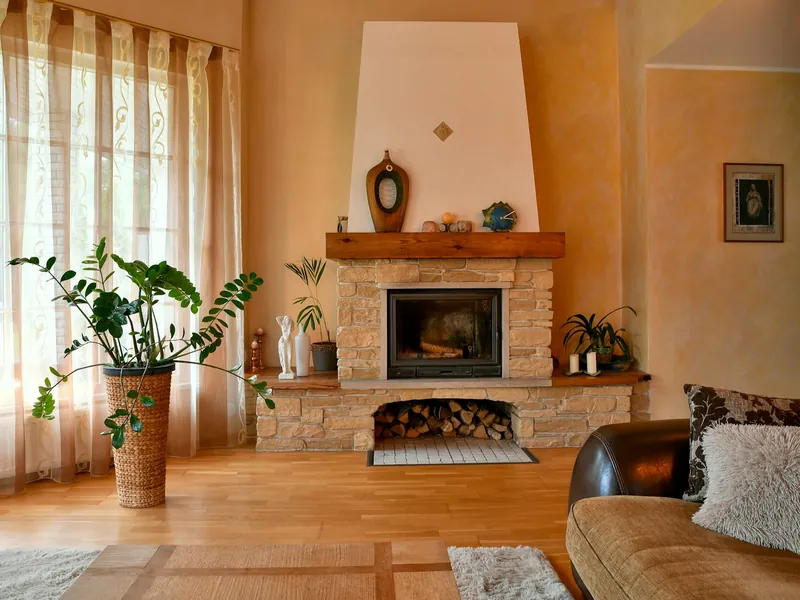
Constructional hearth versus 12 mm superimposed hearth
125 mm constructional hearth
- When required
- All stoves where underside heat can exceed 100°C, or on suspended timber floors without test exemption
- Typical build
- Concrete slab, masonry base or thick stone flagstone isolating timber joists completely
- Front & side overhang
- Min 225 mm (closed door) to 300 mm front; 150 mm sides
12 mm superimposed hearth
- When required
- Only where the stove maker certifies hearth temperature stays below 100°C (many modern EcoDesign stoves on legs)
- Typical build
- 12 mm toughened glass, riven slate or honed granite resting over level floorboards
- Front & side overhang
- Same front and side spark protection; clear visual edge so carpets never encroach
Price my stove
Four quick taps show your Irish stove installation figure before we ask for a phone number. One installer rings you, not five.
A freestanding stove, with flexible chimney lining, supplied and fitted with hearth work: €2,850 to €5,650, typical Irish fitted range.
How this stove figure is worked out
The range reflects typical Irish rates for that appliance type, flue route and scope. Room-heater figures cover an EcoDesign 2022 stove, register plate, vitreous connecting pipe, bird cowl, smoke test and I.S. EN 50291-1 CO alarm. Selecting chimney relining allows for an 8 m to 10 m 904L flexible stainless liner. Boiler stoves allow for open-vented copper primaries and a heat-leak radiator. Tall 3-storey roof scaffolding, core-drilling air vents and marble surrounds depend on the house and are confirmed during the chimney survey.
Clearances to timber beams, gypsum plaster and flue pipes
- Never line a stove chamber with ordinary pink or white plasterboard. Standard gypsum paper-faced boards dehydrate and crumble above 50°C. Use 12 mm calcium silicate fireboard, vermiculite board or exposed brickwork with heatproof render.
- Respect oak mantel beam distances. Unshielded timber beams typically need 350 mm to 500 mm clearance above the stove top plate (or follow the stove manual). Non-combustible cast-concrete wood-effect beams avoid charring risk altogether.
- Single-wall vitreous flue clearance = 3× pipe diameter. A 150 mm uninsulated stove pipe requires 450 mm clearance to combustible wood or plasterboard (reduced by approved twin-wall pipe or ventilated heat shields).
- Keep rugs and baskets outside the apron. Even with a glass door, rolling embers can drop during reloading; riven slate or granite edges protect timber flooring cleanly.
Related stove & flue guides
 Part J rules IrelandAir vents above 5 kW, airtight homes, I.S. EN 50291 CO alarms and ridge heights.
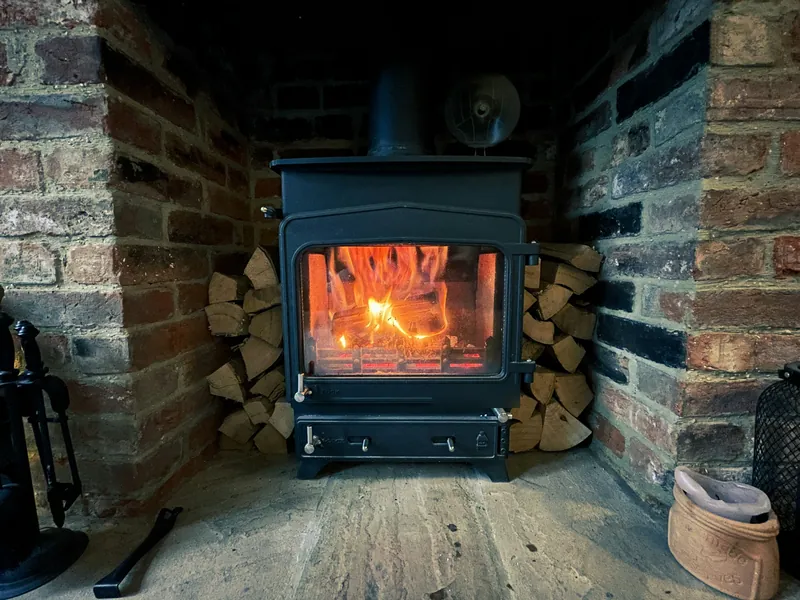 Freestanding stoves5 to 8 kW cast-iron and steel wood or multifuel stoves fitted in Irish hearths.Inset room heatersFlush-fitting 16-inch and cassette stoves inside existing fireplace breasts.
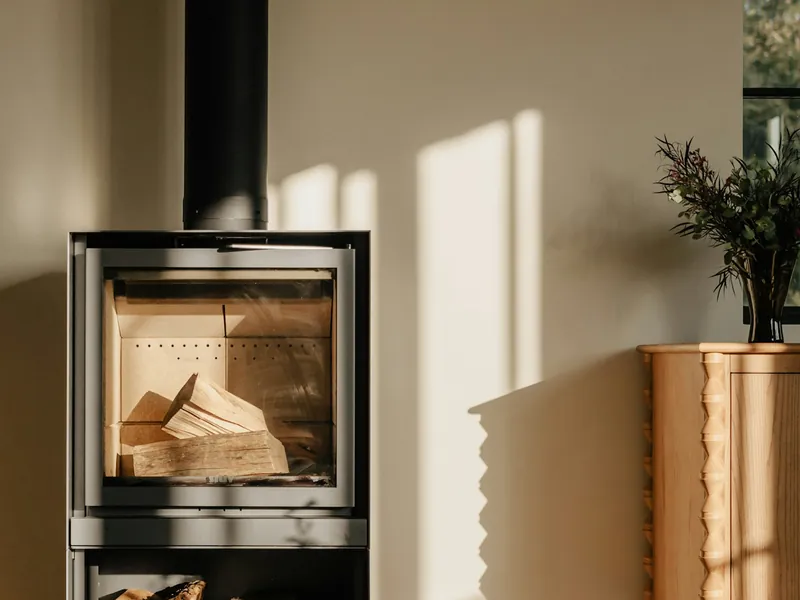 Twin-wall flue systemsInsulated stainless flue routes through gable walls or pitched roofs with no chimney.
 Fit-only stove fittingLabour, register plates, flue adapters and Part J sign-off for customer-bought stoves.Stove installation costComplete Irish breakdown for room heaters, boiler stoves, liners and extras.
Stove fitting questions answered
How much does a new slate or granite stove hearth cost in Ireland?
Supplying and bedding a honed black granite, limestone or riven slate hearth typically costs €300 to €850 depending on width, front apron depth and whether a back hearth slab is also needed.
Can I place a stove directly on laminate or engineered wood flooring?
Only on top of a compliant non-combustible hearth meeting the stove's certified hearth temperature rating (12 mm glass/slate if tested below 100°C, or a full 125 mm constructional hearth otherwise).
Why did the plaster above my neighbour's stove crack?
Ordinary gypsum skim coat expands and shrinks rapidly above a hot firebox opening. Boarding the front breast face with calcium silicate board and high-temperature heatproof plaster prevents hairline cracking.
How close can a stove sit to a non-combustible brick wall?
Most makers allow 50 mm to 100 mm to solid non-combustible masonry so warm air circulates behind the stove; check the appliance data sheet for exact figures.
Every stove installation page and Part J guide
Stoves & flue systems
Part J, sizing & specs
Check your stove fitting figure before booking a chimney survey
Choose the appliance, flue route and scope. When you are ready for a written survey price, your request goes to a single stove installer in your county.